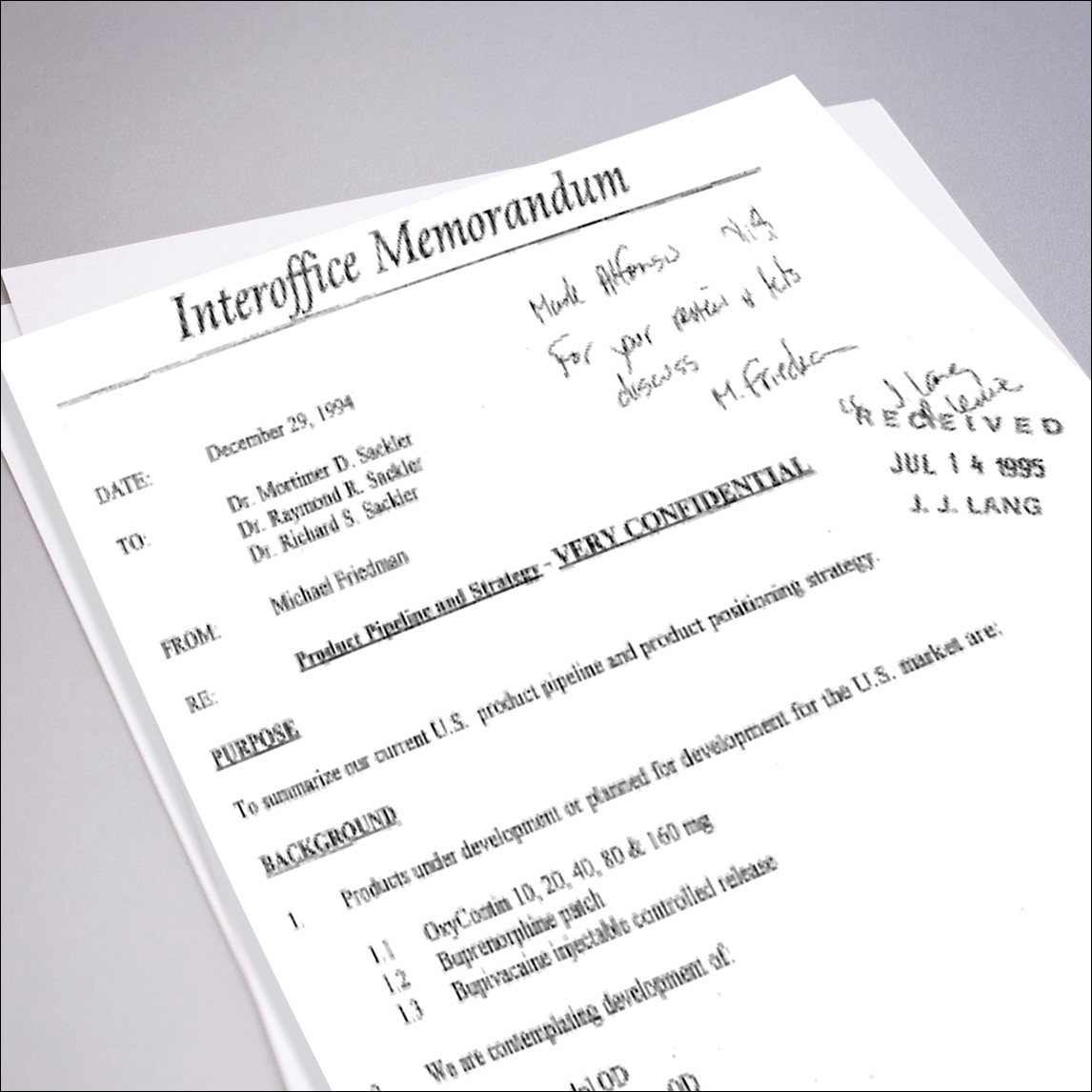
The Opioid Industry Documents Archive (OIDA) is a digital archive co-created by the University of California, San Francisco and Johns Hopkins University containing millions of documents from the opioid industry that shed light on the root causes of the opioid crisis. This unique virtual symposium offers a series of complementary panels that demonstrates OIDA’s value in addressing fundamental questions of importance to historians, health policy and legal experts, journalists, archivists and people with lived experience.
Watch recordings of the full symposium. Expand each day’s title below to view the session description and recordings for individual presentations.
Day #1: Health Journalism, Law and Policy
Tuesday, May 12, Noon-2 PM (ET) ● 9-11 AM (PT)
Speakers will discuss the role of journalism and storytelling in the development of laws and policies designed to prevent further harms from the opioid crisis, and the critical role of document disclosure as a means to improve public health. Watch the full Day 1 recording.
12:00-12:10 Welcome (Caleb Alexander, Johns Hopkins University) [video]
G. Caleb Alexander is professor of epidemiology and medicine at the Johns Hopkins Bloomberg School of Public Health and co-founding director of its Center for Drug Safety and Effectiveness.
12:10-1:00 Keynote (Brian Mann, Correspondent, NPR) [video]
Brian Mann is NPR’s first national addiction correspondent. He also covers breaking news in the U.S. and around the world. Mann began covering drug policy and the opioid crisis as part of a partnership between NPR and North Country Public Radio in New York. After joining NPR full time in 2020, Mann was one of the first national journalists to track the deadly spread of the synthetic opioid fentanyl, reporting from California and Washington state to West Virginia. After losing his father and stepbrother to substance abuse, Mann’s reporting breaks down the stigma surrounding addiction and creates a factual basis for the ongoing national discussion. Mann has also served on NPR teams covering the Beijing, Paris and Milan Olympics and conflicts in Ukraine, Israel, and the West Bank. During a career in public radio that began in the 1980s, Mann has won numerous regional and national Edward R. Murrow awards. He is author of a 2006 book about small town politics called Welcome to the Homeland, described by The Atlantic as “one of the best books to date on the putative-red-blue divide.” Mann grew up in Alaska and is now based in New York’s Adirondack Mountains. His audio postcards, broadcast on NPR, describe his backcountry trips into wild places around the world.
1:00-1:20 Presentation #1 (Anne Zink, Yale School of Public Health) [video]
Dr. Anne Zink is an emergency medicine physician in Palmer, Alaska, a senior fellow at the Yale School of Public Health, and co-founder of PopHIVE.org—a nimble platform built at Yale that integrates de-identified health data to strengthen trust, improve situational awareness, and make actionable insights available to the people who need them most. At Yale, she serves on national committees focused on rebuilding trust in public health and is deeply engaged as an educator and mentor, helping develop the next generation of leaders prepared to navigate real-world complexity.
Dr. Zink previously served as Alaska’s chief medical officer from 2019–2024, leading the state through the COVID-19 pandemic and driving reforms to make government work better for people. Her work included restructuring the health department, strengthening mental- and behavioral-health systems, advancing chronic-disease initiatives, and—most importantly—regularly listening to communities and creating space for honest, robust dialogue.
A practicing emergency physician, she often says that “the emergency department is where all good public policy comes to fail.” To care for her patients, she realized she also had to care for the policies shaping their lives—patients are her why; policy is her how. This human-centered approach underpins her work to braid healthcare and public health, shift systems toward prevention, and create data and decision-making structures that truly serve people.
Nationally, Dr. Zink advises the Vaccine Integrity Project, The Gov Act, the Brown STAT Network, and the Echo Network, and she serves on the board of directors for Science to People. She previously served as a senior advisor to The Pew Charitable Trusts. She trained at Bryn Mawr College (BA) and Stanford University (MD) and Residency in Utah. She is originally from Denver Colorado, and is a former NOLS instructor and Watson Fellow.
1:20-1:40 Presentation #2 (Nabarun Dasgupta, University of North Carolina) [video]
Dr. Nabarun Dasgupta is an innovation fellow at the University of North Carolina Gillings School of Public Health, senior scientist at the the UNC Injury Prevention Research Center, and winner of a MacArthur “Genius Grant” fellowship. An epidemiologist and harm reduction advocate, he creates practical programs to mitigate harms from drug use, particularly opioid overdose deaths. Dasgupta combines scientific studies with community engagement to improve the wellbeing and safety of people who use drugs and people living with debilitating pain. He collaborates with people who have experience with drug use or its consequences to design effective, evidence-based interventions that respond to the needs of people who use drugs and community-based organizations that support them.
Much of Dasgupta’s work focuses on broadening access to inexpensive or free naloxone, which reverses opioid overdose, for people who use drugs and their families and friends. In early work, he co-founded Project Lazarus, a nonprofit in rural Wilkes County, and partnered with the North Carolina Medical Board to enable direct distribution of naloxone to individuals with a doctor’s prescription. Project Lazarus’s efforts drastically reduced overdose deaths in the county. In 2020, Dasgupta and colleagues created a new naloxone supply and distribution model in Remedy Alliance/For The People. Dasgupta worked with the Food and Drug Administration to revise licensing requirements that had made it difficult for harm reduction organizations to access naloxone. Under the new agreement, their nonprofit acts as a wholesale distributor of naloxone. Remedy Alliance/For the People purchases naloxone directly from pharmaceutical companies and distributes it to harm reduction organizations at low or no cost, based on size and budget. They now supply naloxone to over 500 organizations across the country.
In another line of work, Dasgupta has developed a nationwide drug checking program for unregulated substances (that is, street drugs). He devised a collection mechanism that renders drug samples unusable but still testable, so samples can be legally sent through the mail. His Opioid Data Lab determines the ingredients and amounts in samples of drugs and then posts results anonymously on their website. Understanding what substances are in the drug supply, particularly dangerous or unknown ingredients, helps individuals make informed decisions about their drug use. It also allows community members and frontline medical responders to prepare proper care and overdose responses. Dasgupta and his team also harness the lab’s findings to conduct research on the broader U.S. drug supply and use trends. With compassion, collaboration, and creative vision, Dasgupta brings much-needed leadership to the critical work of understanding and reducing deaths and other harms from drug use.
1:40-1:55 Facilitated Discussion (Pamela Ling, University of California, San Francisco) [video]
Pamela Ling is professor of medicine and director of the UCSF Center for Tobacco Control Research and Education.
1:55-2:00 Wrap-up (Caleb Alexander)
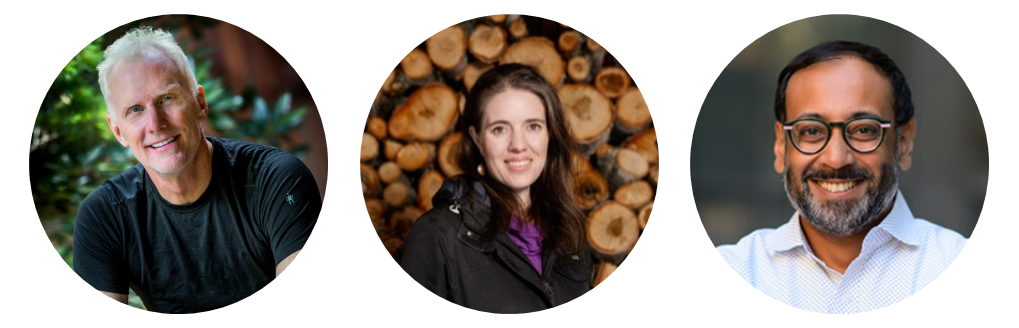
From left to right: Brian Mann, Anne Zink, Nabarun Dasgupta
Day #2: Archives and Artificial Intelligence
Wednesday, May 13, Noon-2 PM (ET) ● 9-11 AM (PT)
In the digital age, organizational records are being produced on a scale that dwarfs earlier archives of institutional records. Speakers will talk about the challenges and opportunities of AI and other technology for managing and providing access to massive digital collections like OIDA. Watch the full Day 2 recording.
12:00-12:10 Welcome (Beth Whipple, Johns Hopkins University) [video]
Beth Whipple is the interim director of the Welch Medical Library at Johns Hopkins University.
12:10-12:35 Presentation #1 (Christopher Prom, University of Illinois) [video]
Christopher J. Prom, PhD, is professor and coordinator for sponsored research development and acting head of the History, Philosophy, and Newspaper Library at the University of Illinois Urbana-Champaign. A Fellow of the Society of American Archivists, he holds a Ph.D. in History from the University of Illinois, with an emphasis in British social policy. In 2009-2010, he was a Fulbright Distinguished Scholar at the University of Dundee, where he led a project to help make digital preservation methods more accessible to archives and libraries.
He has written extensively about topics relating to digital cultural heritage and is most recently the author of the 2nd edition of Preserving Email, a Technical Watch Report published by the Digital Preservation Coalition. He has active research interests in humanitarian and community archives. Currently, he serves as director of the DNA TRUST Program, a new initiative that seeks to inspire, motivate, and organize a decentralized group of people to create and maintain a Digital News Archive (DNA) designed to capture what American citizens are reading and how political information flows through society.
12:35-1:00 Presentation #2 (Luciana Duranti, University of British Columbia) [video]
Luciana Duranti is a professor emerita at the School of Information at the University of British Columbia. Her areas of specialization are archival theory, diplomatics, and digital records. Her research aims to find solutions to digital record issues that can be universally applied.
Since 1998, she has been the director of InterPARES, a multi-national and multi-disciplinary research project studying the long-term preservation of trustworthy digital records. The latest iteration of the project, I Trust AI, which began in 2021, aims to ensure that archival concepts and principles inform the development of responsible AI. Duranti has been the lead investigator for a number of other funded research projects, such as Records in the Clouds and Digital Records Forensics, and she has developed the ICA Multilingual Archival Terminology database, which now includes terms in 25 languages.
She chairs the Government of Canada Standard Board, National Standard of Canada CAN/CGSB-72.34 Electronic Records as Documentary Evidence. She is a member of the UNESCO Memory of the World (MOW) Standing Committee on Education and Research (SCEaR) and has previously served both as president of the Society of American Archivists and the Association of Canadian Archivists. She has published extensively in the areas of diplomatics and archival science, and presents at conferences around the globe.
1:00-1:25 Presentation #3 (Paco Nathan, Senzing) [video]
Paco Nathan leads DevRel for the Entity Resolved Knowledge Graph practice area at Senzing.com and is a computer scientist with +40 years of tech industry experience and core expertise in data science, natural language, graph technologies, and cloud computing. He’s the author of numerous books, videos, and tutorials about these topics. He also hosts the monthly “Graph Power Hour!” webinar.
Nathan advises Kurve.ai, EmergentMethods.ai, and is lead committer for the strwythura, kglab, and pytextrank open source projects. Formerly, he was director of the Learning Group at O’Reilly Media and director of community evangelism at Databricks.
1:25-1:55 Facilitated Discussion (Stefana Breitwieser, Johns Hopkins University) [video]
Stefana Breitwieser is collections archivist for the Opioid Industry Documents Archive at Johns Hopkins University.
1:55-2:00 Wrap-up (Beth Whipple, Johns Hopkins University)
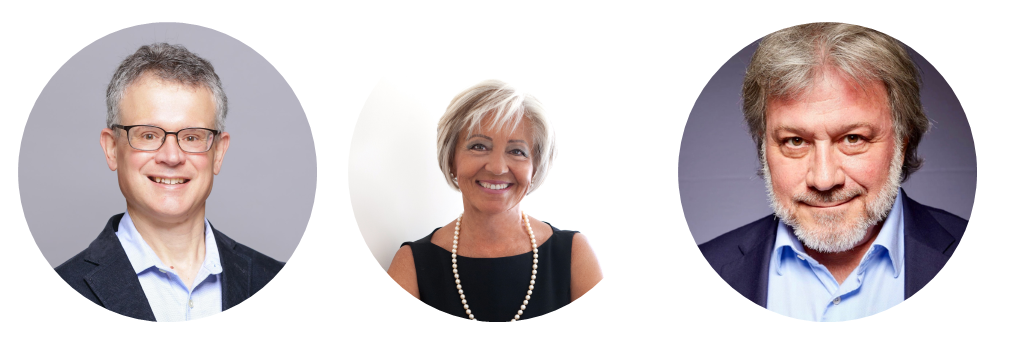
From left to right: Christopher Prom, Luciana Duranti, Paco Nathan
Day #3: Stories from the Archive and the Field
Thursday, May 14, Noon-2 PM (ET) ● 9-11 AM (PT)
An interdisciplinary panel will explore the ways in which OIDA collections serve as an important resource for looking back and looking forward, telling new stories and developing new analyses about the worst drug epidemic in U.S. history. Watch the full Day 3 recording.
12:00-12:10 Welcome (Kevin Hawkins, Johns Hopkins University) [video]
Kevin Hawkins is program director for OIDA.
12:10-12:35 Presentation #1 (Claire Clark, University of Kentucky) [video]
Claire D. Clark, PhD, MPH is a historian of medicine at the University of Kentucky. She is a tenured Associate Professor in the Department of Behavioral Science in the College of Medicine and holds a joint appointment in the Department of History. She is the author of The Recovery Revolution: The Battle Over Addiction Treatment in the United States (Columbia University Press, 2017).
12:35-1:00 Presentation #2 (Tracie Gardner, National Black Harm Reduction Network) [video]
Tracie M. Gardner has worked for more than three decades in the public health, public policy, and not-for-profit fields. With a focus on substance use and the impact of the War on Drugs and incarceration on Black communities in the United States, Ms. Gardner is a nationally recognized expert on health and race inequities. As a highly requested speaker on these issues, she is often quoted in the media and contributes to various research and journal articles on institutional racism’s impact on the health and criminal legal systems.
She is currently the executive director of the National Black Harm Reduction Network (NBHRN), a newly launched advocacy and technical assistance organization. NBHRN is dedicated to advancing harm reduction principles that optimize health and wellness for Black people who are disproportionately harmed by public health initiatives, the criminal legal system, and drug policies.
In May 2024, New York Attorney General Letitia James appointed Ms. Gardner to the state’s Opioid Settlement Fund Advisory Board, which provides recommendations for how New York’s opioid settlement funds should be used in communities across the state.
1:00-1:25 Presentation #3 (Coryn Mayer, United Against Fentanyl and Whitman-Walker) [video]
Coryn Mayer is a registered nurse at an FQHC site, certified in addictions and HIV/AIDS nursing. She has clinical experience developing and implementing individualized opioid use disorder induction, tapering, and monitoring protocols for fentanyl use disorder and chronic pain management among chronic disease patients. A specialist in drug policy implementation, Coryn serves as director of policy at United Against Fentanyl, a 501(c)(3) nonprofit organization, where she provides policy research and legislative analysis to inform bipartisan state and federal advocacy efforts in response to the overdose/poisoning crisis. Her scholarship has been published in the Journal of the Association of Nurses in AIDS Care, the Journal of Psychoactive Drugs, the O’Neill Institute for National and Global Health Law, and the Opioid Policy Institute. She has been invited to present for the District of Columbia’s Opioid Abatement Commission, District town halls, and the Johns Hopkins Bloomberg School of Public Health. Grounded in a socioecological framework, her research draws on qualitative and exploratory methods to advance evidence-informed policy. She holds an MS in Addiction Policy and Practice from Georgetown University and a BS from the University of Virginia.
1:25-1:55 Facilitated Discussion (Tanner Wakefield, University of California, San Francisco) [video]
Tanner Wakefield is an associate specialist at the Center for Tobacco Control Research and Education at UCSF.
1:55-2:00 Wrap-up (Kevin Hawkins, Johns Hopkins University)
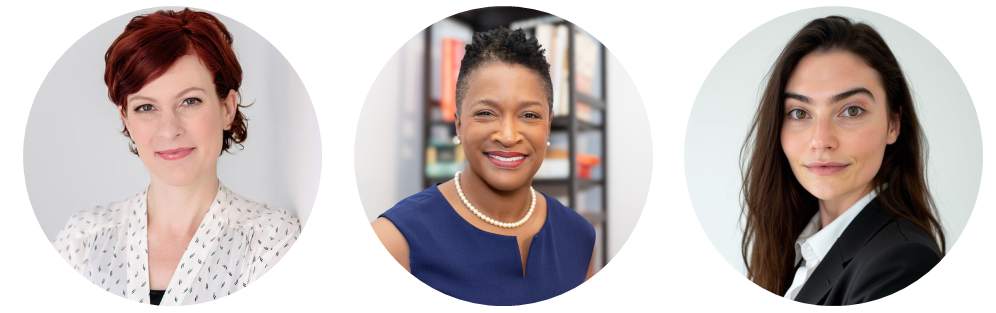
From left to right: Claire Clark, Tracie Gardner, Coryn Mayer
Click to access symposium recordings
The OIDA National Symposium has been made possible in part with support from the UCSF-JHU Opioid Industry Documents Archive.